
Quantum Computing Can Provide Huge Boost to Machine Learning
(ARXIV.org) Machine learning is a field of computer science that seeks to build computers capable of discovering meaningful information and making predictions about data. It is the core of artificial intelligence (AI) and has powered many aspects of modern technologies.
One of the biggest problems facing machine learning is the so-called curse of dimensionality—in general the number of
training data sets required for the machine to learn the desired information is exponential in the dimension d. If a data set lies in a high-dimensional space, then it quickly becomes computationally unmanageable. Meanwhile, the idea of quantum information processing has revolutionized theories and implementations of computation. New quantum algorithms may offer tantalizing prospects to enhance machine learning itself. The interaction between machine learning and quantum physics will undoubtedly benefit both fields.
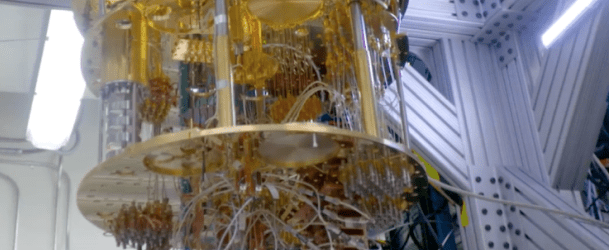
Quantum technologies, especially quantum computing, have the potential to provide a huge boost to machine learning. For one thing, machine learning ofen deals with large amounts of data, and one common data analysis technique is the fast Fourier transform (FFT). With quantum computers, there is a quantum version of FFT that is exponentially faster than the classical version.3 For another, machine-learning algorithms o#en require solving a huge number of linear problems that amount to doing many matrix multiplications.
This corpus is a diverse collection of text data from various sources, including websites, articles, and documents, covering topics such as technology (particularly quantum computing and machine learning), data protection and privacy policies, professional development and training, and company information. This collection includes contexts from many websites, financial reports, investor information, and corporate governance, which can be drawn upon to provide information and answer questions.