
Post-Quantum Nostalgia
Unifying the Past, the Present, and the Future
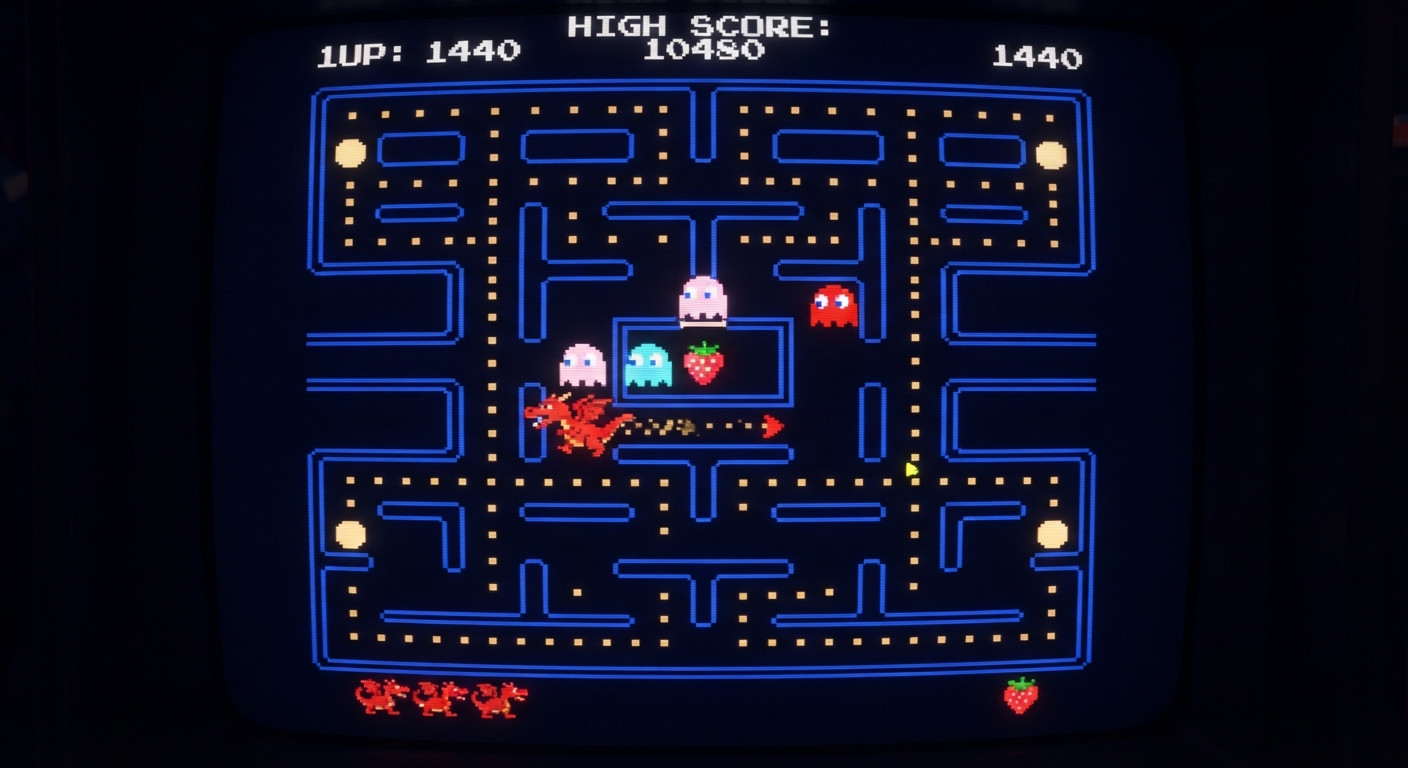
Frank La Vigne takes a blender, adds the present need to migrate to post-quantum cryptography, the future threat from cryptographically relevant quantum computers, and the obvious choice of a 1980s arcade look-and-feel, and then pours the concoction into a 92-second video. This digital beverage is meant to explain all of the hubbub over “harvest now, decrypt later.” I want a cocktail umbrella next time, but this is still a tasty treat.
This week’s IQT News:
- Review of LI News + Event Updates
- IQT Sunday Edition
- The Leading Source for Actionable Intelligence to the Quantum Computing Industry
- IQT The Quantum Dragon Podcast Episode 92 – The Quantum Kid
- Early-Stage Prototype Products in Quantum Chemistry and Quantum Life Sciences
- Prototype and Early-Stage Commercial Quantum Finance Products
This week’s The Premium Quantum Dragon (Substack):
- Haiqu’s AgenticOS
- Publicly Inaccessible All-to-All Connectivity 3
- Keynesian Dragon Spirits 0
- What’s under the AI hood?
- Publicly Inaccessible All-to-All Connectivity 4
- Keynesian Dragon Spirits 1
- Publicly Inaccessible All-to-All Connectivity 5
This corpus is a diverse collection of text data from various sources, including websites, articles, and documents, covering topics such as technology (particularly quantum computing and machine learning), data protection and privacy policies, professional development and training, and company information. This collection includes contexts from many websites, financial reports, investor information, and corporate governance, which can be drawn upon to provide information and answer questions.
This week’s Friends of The Quantum Dragon (inline):
- Unlocking Capabilities That No Single System Could Achieve Alone by Pranav Gokhale, CTO of Infleqtion
- “We can help their engineers identify promising applications… and test them.” by Milli Peled, Director of Business Development at Classiq
- Molecular interactions and quantum hashing and drone delivery routes! Oh, my! by Akira Tanaka, Head of APAC at Classiq
- Quantum risk presents a new insurance underwriting challenge. by Christian Davies, Group Head of Innovation and Digital Capital at Relm Insurance
In this edition:
- 1440’s Popular Quantum
- A game you cannot win unless…
- Thank you, Intel!
- IQT The Quantum Dragon Podcast Episode 92 – The Quantum Kid
- Other Incarnations of The Quantum Kid
- 13-Year-Old Subatomic Tanvi
- Unlocking Capabilities That No Single System Could Achieve Alone
- The GPU Side Quest That Became the Main Story
- “We can help their engineers identify promising applications… and test them.”
- An Agentic Orchestra with Quantum Reinforcement Learning
- Molecular interactions and quantum hashing and drone delivery routes! Oh, my!
- What the heck does that mean?
- Quantum risk presents a new insurance underwriting challenge.
- Photonic Quantum Computing
- “Unwrap” the wheel into a table!
- Exercise 1.1: How many molecules of caffeine do you consume a day?
- Won’t you help a dragon out?
- There must be something in the water.
1440’s Popular Quantum
This popular science stuff isn’t the type of coverage that industry insiders are looking for, but I accidentally discovered that quantum is a recurring theme in 1440’s Science & Technology newsletter, and that’s noteworthy. I haven’t seen a breakdown specifically for S&T, but 1440 overall claims 4.5 million subscribers, and claims to be adding 200,000 subscribers monthly.
A game you cannot win unless…
This is not a commentary on Google’s quantum contextuality news, although I’ll be sharing relevant coverage in appropriate respective newsletters. Either way, I cannot ignore the framing of the problem as a game. I don’t know that it’s a game that you’ll put Monopoly back on the shelf for and gather the whole family around for on major holidays, but it’s framed as a game nonetheless.
Thank you, Intel!
Intel announced a new introductory video series on quantum computing and all I can say is: it’s about damn time. After all, if this industry needs only one thing, it’s definitely more introductory content. I mean, how is anyone supposed to know what quantum computing even is if literally everyone and their mothers aren’t churning out ungodly volumes of introductory coverage? This link may require a LinkedIn account.
IQT The Quantum Dragon Podcast Episode 92 – The Quantum Kid
I… well… I didn’t do anything this episode! The Quantum Dragon, however, asked The Quantum Kid how he became The Quantum Kid, his most memorable podcast to date, what he does behind the scenes, his dream guest, where he’ll be in 20 years, and where folks can find him.
Other Incarnations of The Quantum Kid
While searching for links to share with the publication of “IQT The Quantum Dragon Podcast Episode 92 – The Quantum Kid,”
- Kid Quantum (DC Comics) which, despite the singular name, is actually 3 superheroes, each belonging to a different incarnation of the Legion of Super-Heroes. Also here, here, and here.
- Quantum kid, by GAM3R1ORD, is a barely legible, hand-drawn comic strip that, despite being categorized as “Comedy,” isn’t funny.
- Quantum Kid, “a courageous and charismatic superhero dedicated to protecting the bustling metropolis of Metro City from all manner of threats” in the comic book series “The Adventures of Quantum Kid.”
- The Quantum Kid, joins The Scarlet Bolt in “LIGHT AND PARTICLE,” a dialogue-driven narrative of science, storms, and love across time and velocity.
I also discovered these other learning resources for kids, none of which are recommendations (I’m just listing them for now, not checking them) except for 13-year-old Subatomic Tanvi, which you should definitely check out:
- Explaining Quantum Theory to Children: A Fun and Simple Guide
- Kiddle quantum mechanics and quantum theory facts for kids
- Quantum for Kiddos: Adult Knowledge Decoded by Thy Nerd Kid but Managed by his Parents
- Quantum Physics for Kids by Tanvi Gopalan, aka Subatomic Tanvi, “a 13 year old member of American Mensa who loves Quantum Physics”
- Quantum Physics for Kids Explained (Without the Weird Headache)
- Quantum Physics for Kids: Unraveling the Mysteries of Physics
- The Magic Coin: A Kid’s Guide to the Quantum World (The Quantum Kid’s Library Book 1)
13-Year-Old Subatomic Tanvi
Now that you’ve subscribed to Kai, The Quantum Kid, turned on that notification bell, watched all of his videos, and liked and commented on every single one, I encourage you to lend your ears to Tanvi Gopalan and support another bright young person. A word of advice: It’s much better to listen when I do the encouraging; don’t make me suggest to The Quantum Dragon that you might need some extra encouragement.
Unlocking Capabilities That No Single System Could Achieve Alone
Following the announcement that memQ and Infleqtion signed an MoU to advance networked quantum computing, Pranav Gokhale, CTO of Infleqtion, provided this unique comment:
“The future of quantum computing isn’t just about building more powerful machines. It’s about connecting them to work together and unlocking capabilities that no single system could achieve alone. This partnership with memQ marks an important step toward commercial adoption, bringing the quantum industry closer to moving technology beyond the lab and into real-world applications.”
The GPU Side Quest That Became the Main Story
Diraq is the next Nvidia blah, blah, blah, blah. Yeah, sure, of course it is. After all, countless others claim to be the next Nvidia, too. Notwithstanding all of these CEOs must sure be busy with their respective personal “side quests,” if you know what I mean, The Quantum Dragon generally loves the framing of anything as a side quest. Slaying dragons, or pointlessly trying to, is always a main quest, so by all means put that off.
“We can help their engineers identify promising applications… and test them.”
Following the news that Classiq has partnered with Ventum Consulting to help enterprises identify relevant use cases, build internal expertise and develop quantum applications tied to business priorities, Milli Peled, Director of Business Development at Classiq, provided this unique comment:
“Ventum understands the challenges its German clients face. Together, we can help their engineers identify promising applications for quantum computing and test them on problems they know firsthand.”
An Agentic Orchestra with Quantum Reinforcement Learning
Prof. Eduardo R. Miranda continues to push the frontier of quantum computer music, this time with Moein Fahmideh Vatandoost, also from the University of Plymouth. The plain English description is a must-read, because there’s quite a bit going on here. And, of course, there’s a link to the paper if that’s not enough for you. This link may require a LinkedIn account.
Molecular interactions and quantum hashing and drone delivery routes! Oh, my!
Following the announcement that the Classiq platform powered the award-winning quantum application development by Shionogi, KDDI Research, Inc., and SoftBank Corp. at Japan’s NEDO Challenge, Akira Tanaka, Head of APAC at Classiq, provided this exclusive comment:
“Each of our partners brought a distinct research solution to Japan’s NEDO Challenge. We’re proud to have contributed to Shionogi’s work on molecular interactions, KDDI Research’s work on quantum hashing and SoftBank’s work on drone delivery routes.”
What the heck does that mean?
Prof. Amit Hagar offers up an analogy about PsiQuantum and AMD using Chekhov’s Three Sisters. I have never encountered this story before, which makes it even more interesting than might otherwise be the case. Unfortunately, I can’t seem to find an animated synopsis of the story, just a relatively short narration. I guess the moral of the story for The Quantum Dragon is to stick with relatively popular analogies.
Quantum risk presents a new insurance underwriting challenge.
Following the warning by the International Organization of Securities Commissions (IOSCO) that the financial sector needs to take “immediate action” to address the risks posed by cryptographically relevant quantum computers, Christian Davies, Group Head of Innovation and Digital Capital at Relm Insurance, provided this unique comment:
“IOSCO’s warning reinforces that quantum computing is no longer a distant technological concern, but an emerging financial risk that institutions need to prepare for today. Much of the global financial system, including blockchain infrastructure, relies on cryptographic protections that could become vulnerable as quantum capabilities advance. The challenge is that institutions cannot wait until those vulnerabilities are exploited to begin addressing them.
From an insurance perspective, quantum risk presents a new underwriting challenge. Insurers need to understand not only an institution’s current cybersecurity posture, but also its exposure to cryptographic vulnerabilities, its reliance on third-party infrastructure and the steps being taken to transition towards post-quantum security.
Through our work with Project Eleven, we’re exploring how these emerging risks can be assessed and what effective underwriting frameworks could look like. As financial institutions begin adopting quantum-resistant cryptography, demonstrating a credible transition strategy will become increasingly important for managing risk and maintaining insurability. The institutions that act early will be better positioned to protect their assets, customers and long-term financial resilience.”
https://a.co/d/0i1fndcr
Photonic Quantum Computing
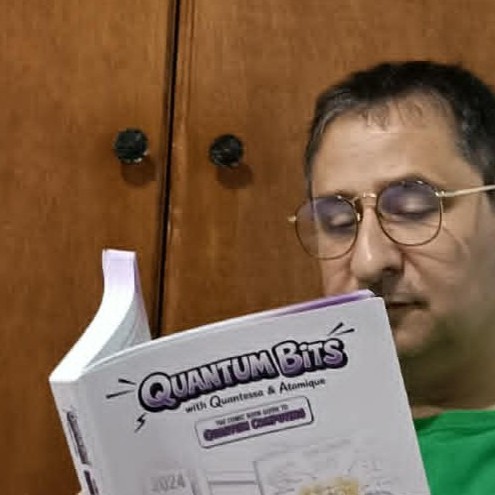
Yuval Boger’s “Quantum Bits” takes a high-level view of this modality. In actuality, this must be the most diverse modality I’ve encountered. PsiQuantum and Xanadu steal headlines with their warehouse-sized systems because of their funding levels, but then we have QuiX Quantum’s benchtop form factor, Quandela’s rack-mounted form factor, and Rotonium’s edge-destined form factor. And those are just architectures. There are many ways to use photons as qubits.
https://a.co/d/07IJjYvD
“Unwrap” the wheel into a table!
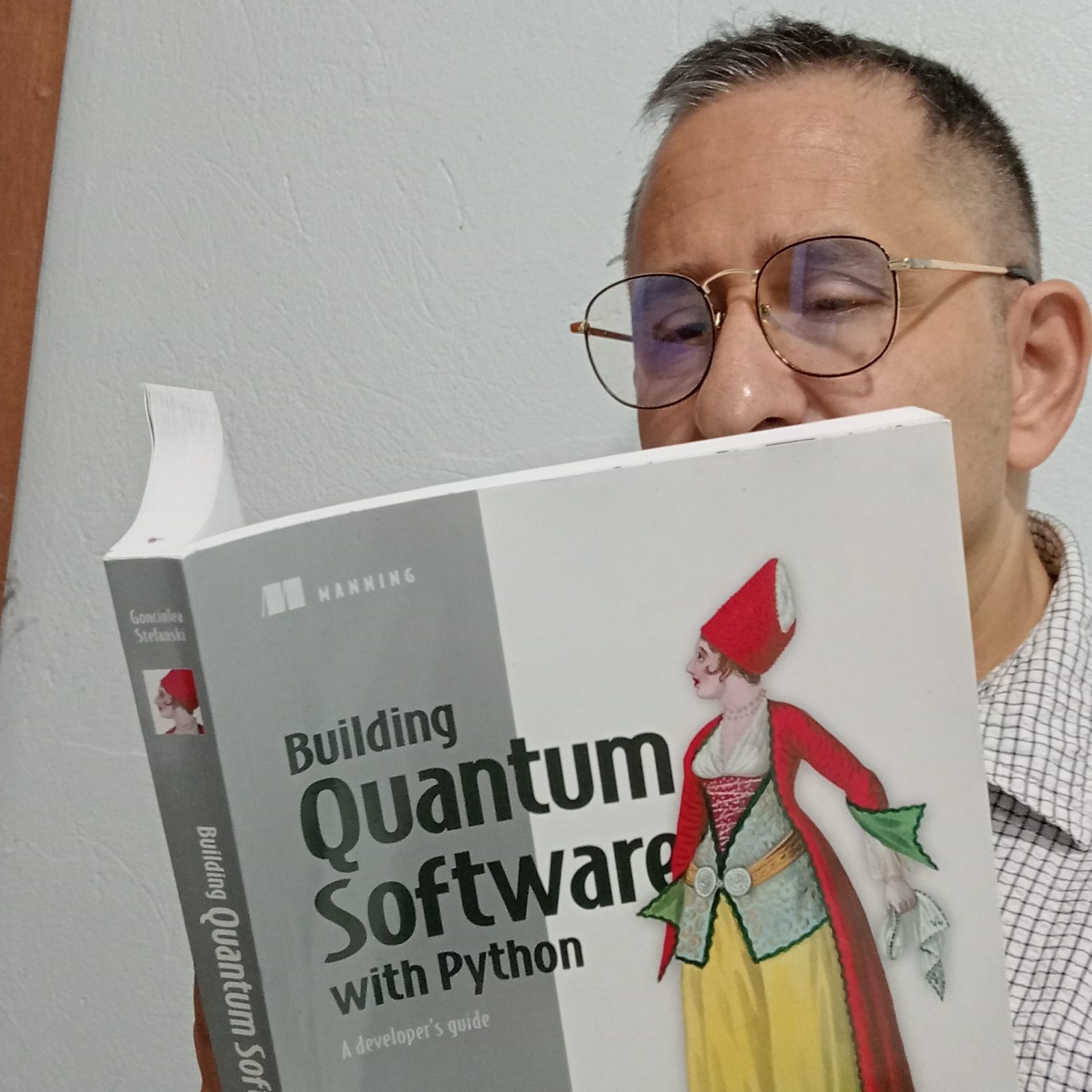
Dr. Constantin Gonciulea and Charlee Stefanski demonstrate how simply we can adapt visualizations to different audiences, improving both learning and reporting. The rose chart, which I have previously admired as novel, simply unrolls into vertical or horizontal histograms, the former of which we most typically encounter. They basically applied Microsoft Excel to quantum computing, showing that there are many ways to present data.
https://a.co/d/0aci3p73
Exercise 1.1: How many molecules of caffeine do you consume a day?
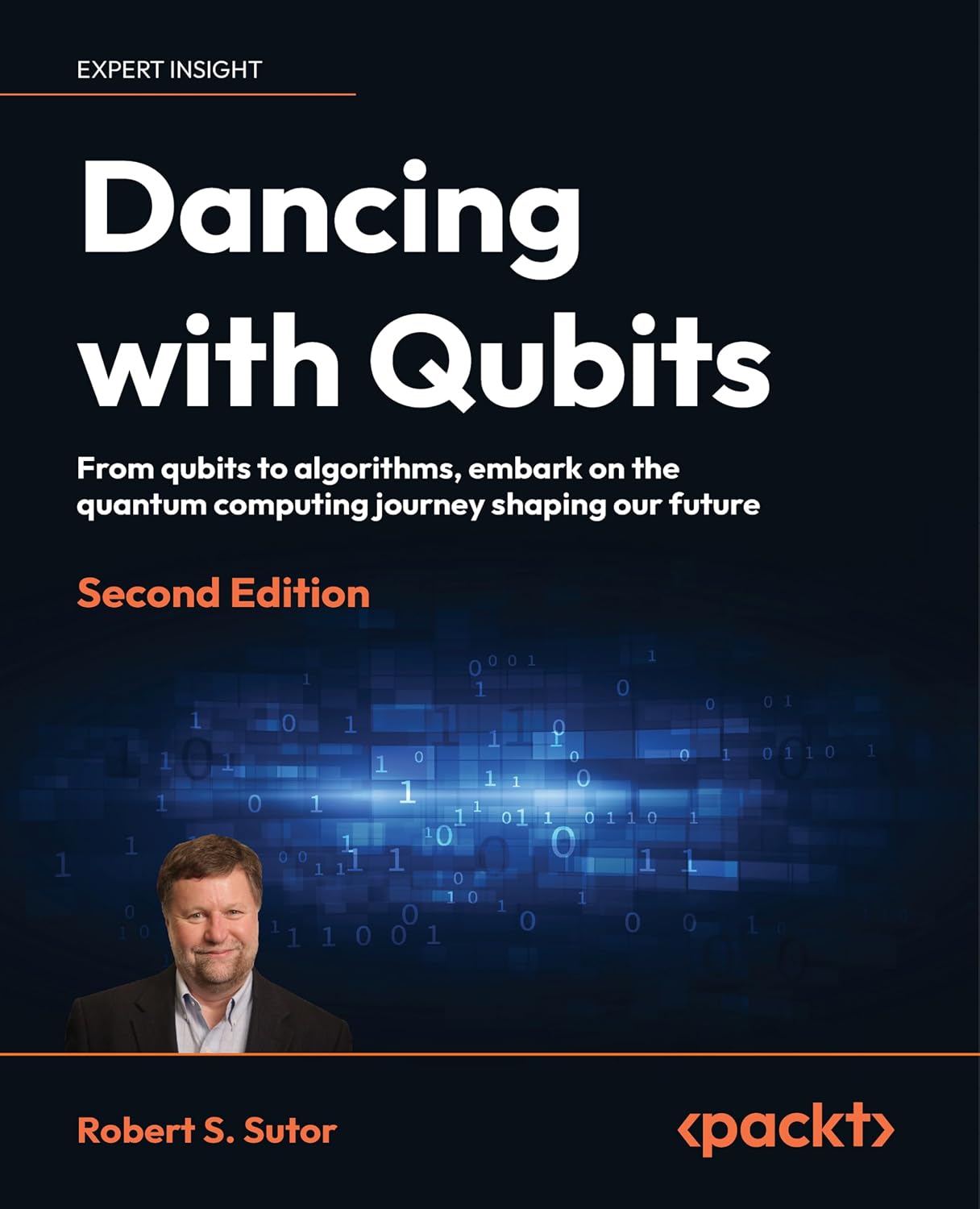
I often mention Dr. Bob “The Godfather of The Quantum Dragon” Sutor’s caffeine analogy, always noting that he, of course, tells it better. But I just noticed that the very first mathematical exercise in his first book is to actually calculate your caffeine consumption by the molecule. I freely admit I can’t count that high. More impressively, The Quantum Dragon just said that he can’t count that high! Wow!
Won’t you help a dragon out?
Uncle Sergio Gago drank a little too much rum and accidentally knocked over a row of neatly stacked gold coins. Think of it as akin to red dragons playing dominoes, but with stacks of gold coins instead of white tiles. The Quantum Dragon had to start all over again, and he just ain’t happy about it, but he still can’t kick out Uncle Sergio because family is family. But if you have a consulting gig, it would really be win-win-win for everyone involved.
There must be something in the water.
Admit it: When we talk about infrastructure that is vulnerable to cryptographically relevant quantum computers you’re not thinking about water treatment. Listen for 3:01, however, as Mark McGuire explains how this especially critical infrastructure is not only vulnerable, but that it’s going to be some of the hardest to upgrade post-quantum cryptographic standards.