



Distributed Borg Drone Computing
Nu Quantum
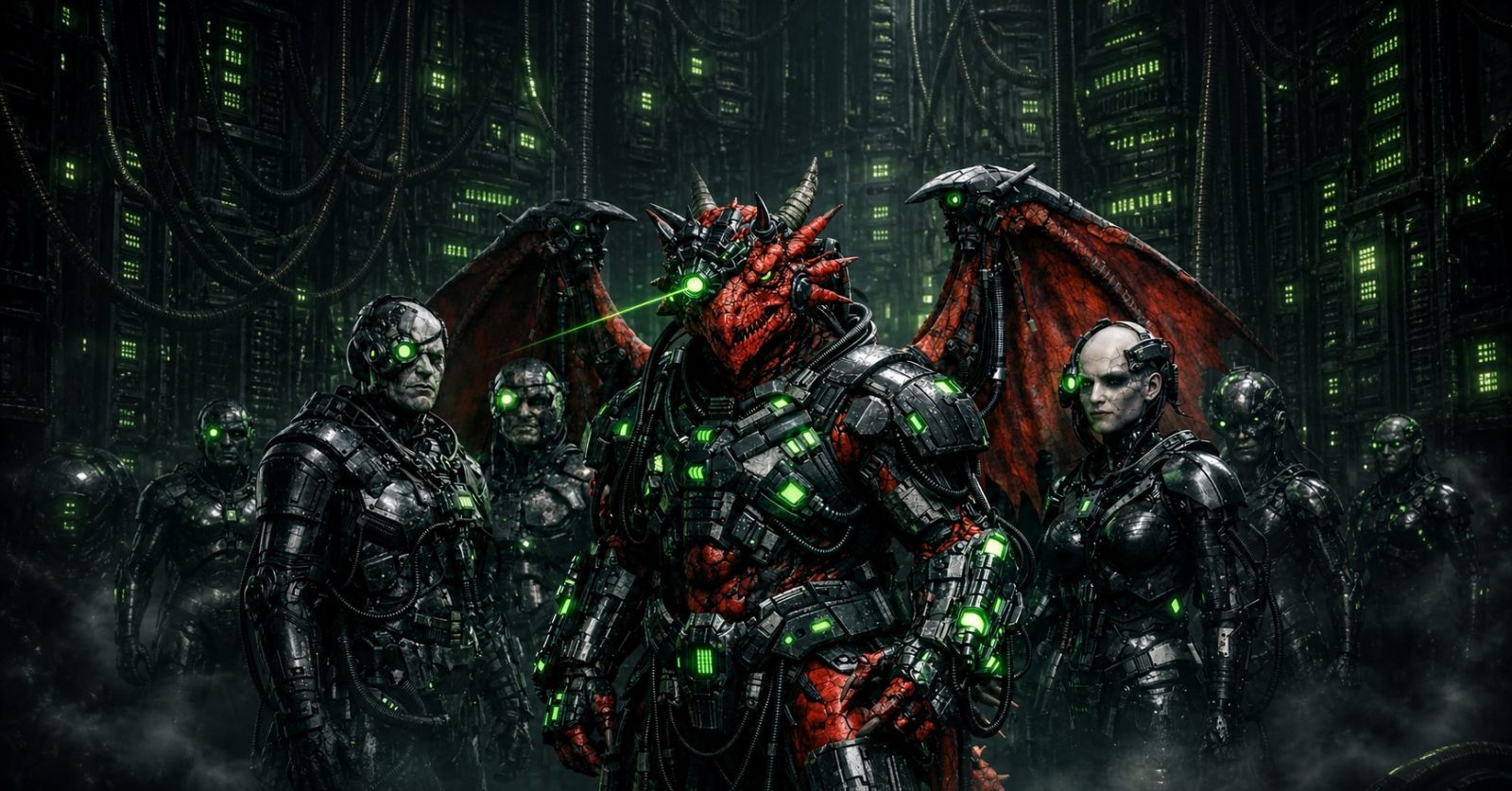
When Captain Jean Luc-Picard’s Federation Starship Enterprise first encountered the Borg, a cybernetic multi-species hive with a collective identity and technological assimilation, one of the first things the Borg did was to beam one of its drones onto the Enterprise, where it began scanning one of the computers. After Security Officer Worf managed to disable that first drone, the Borg quickly sent another to replace him and complete the mission.
Understatement: It went downhill for the Enterprise and the Federation after that.
This is analogous to Nu Quantum’s new research on “Tolerating Device Failure in Distributed Quantum Computing.” You have a Borg collective, a network if you will, of distributed QPUs working together, and you lose one of them for whatever reasons. The reliability and elasticity of the hive, the distributed system, exceed that of its subcomponents, allowing the preservation and recovery of quantum information after unplanned failures.
How does it work?
This approach requires quantum error correction, which encodes many physical qubits as a logical qubit. The logical quantum information is encoded across a wide network, as opposed to on a single node, thus circumventing total information loss upon a single node failure. The information is then transferred to a replacement node when it comes online.
Each drone, I mean QPU, is therefore swappable or replaceable mid-operation with minimal impact on logical error rates. Operations can continue. And like the Borg collective, increasing the size of the quantum error correction code across more QPUs increases resilience and availability further. Furthermore, like the species-agnostic Borg, this technique is modality agnostic.
Conclusion
This research makes the argument against putting all of your proverbial eggs, or qubits, into one proverbial basket, or QPU. Like a hard drive, or any other hardware for that matter, it can fail. As you grow a business, you don’t save all of your data onto one hard drive; you set up RAID, which encodes your data across multiple hard drives. If one should fail, it is replaceable mid-operation, the data gets rebuilt on the new hard drive, and you carry on. So, why would we plan for hours or days of continuous quantum computation on a single computer and risk having a single point of failure squander it all?
We won’t.
The future is distributed quantum computing. Resistance is futile.