



A Superconducting Bus Architecture
Sometimes the simplest ideas are the hardest ones to come up with.
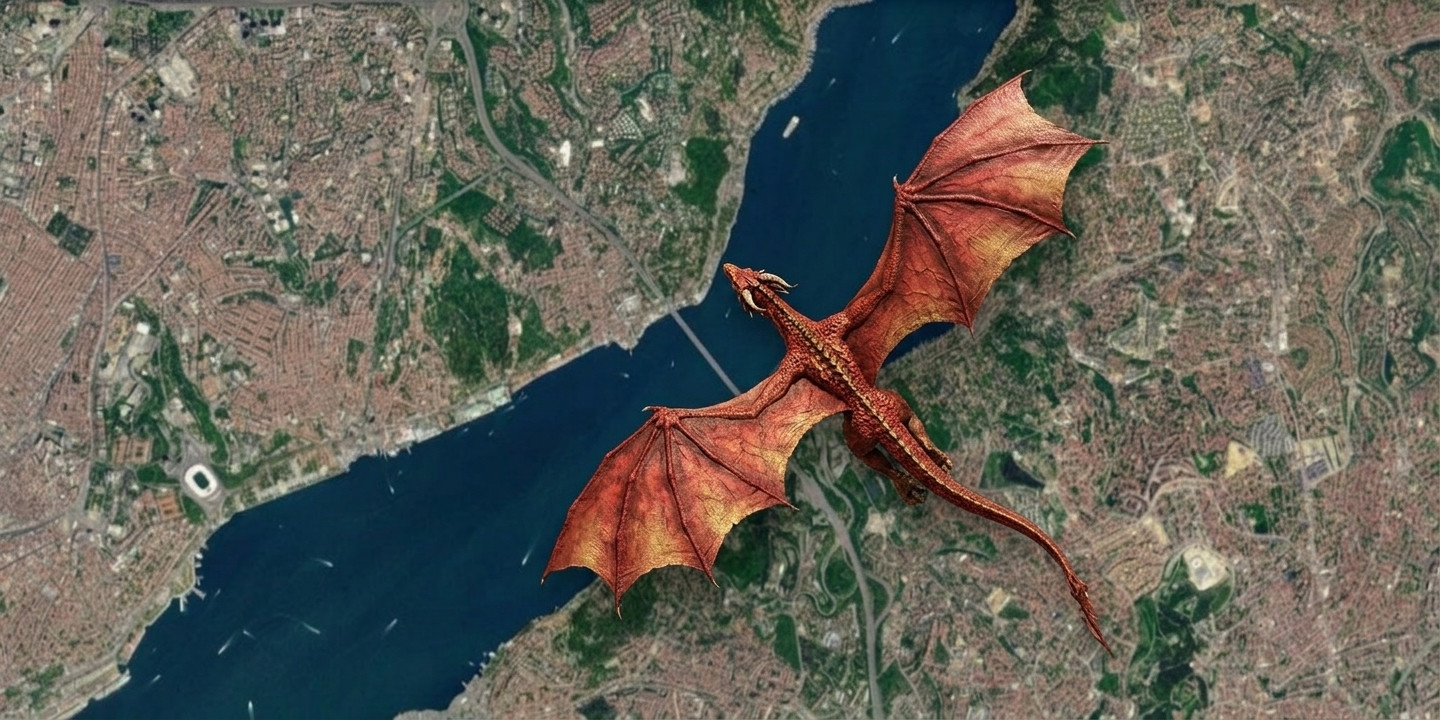
The Quantum Dragon had just finished up a visit to Qarakal Quantum in Tel Aviv, Israel, and he decided to fly over to Europe and visit his old stomping grounds. You know, pillage some villages for old times’ sake. As he was flying high over Istanbul, Turkey, he realized he couldn’t make out too many of the landmarks on the ground, so he flew down to a university, hoping to find some physicists who wouldn’t be terrified of him. They directed him to the nearest bus terminal.
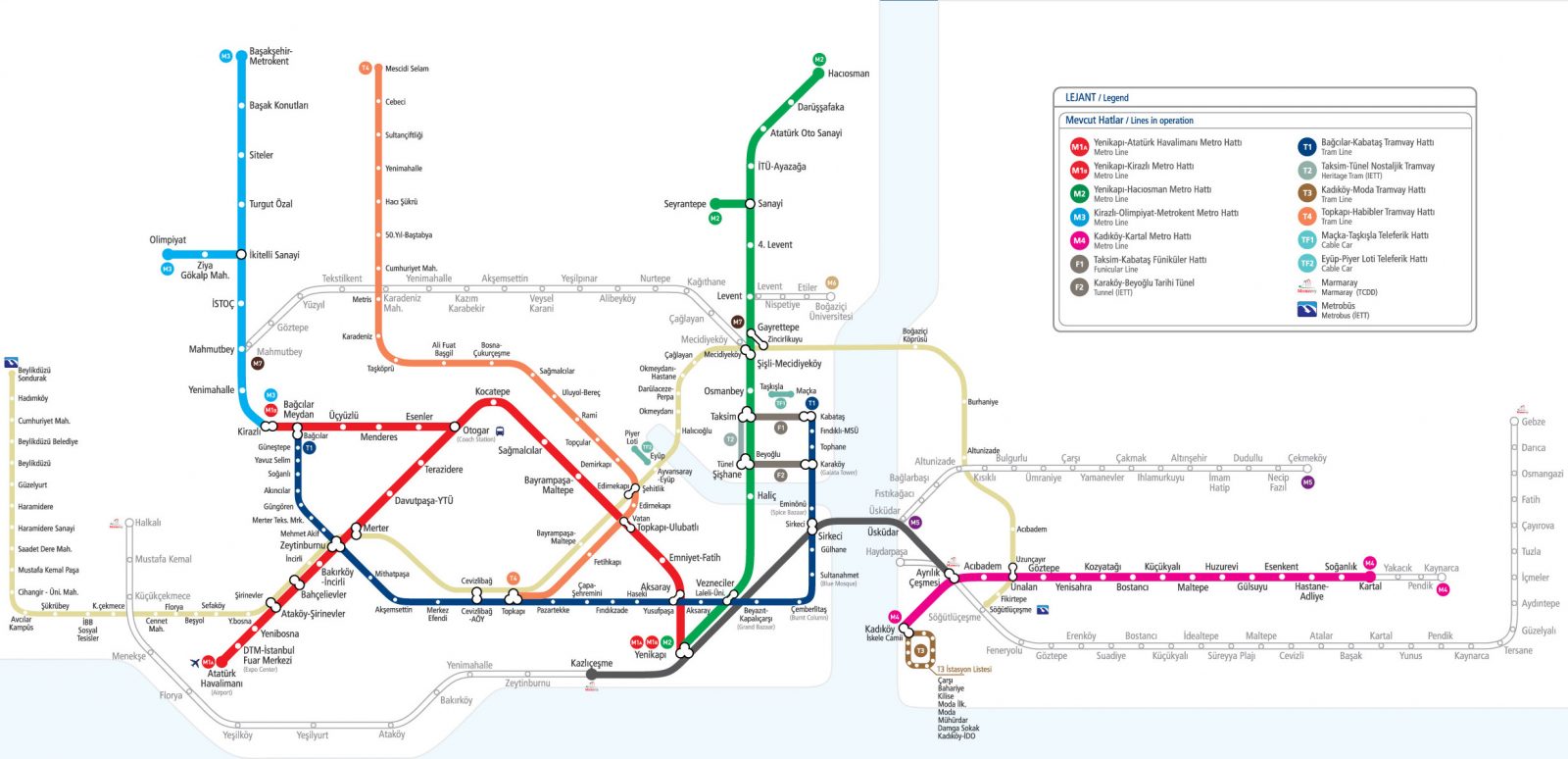
On the wall of the bus terminal, he found a map of the city’s bus routes, and Qarakal Quantum’s architecture suddenly made sense.
The Pangaea Supercontinent
One thing you’ll find in Istanbul and nowhere else in the world is that the bus system seamlessly connects two continents: Europe and Asia. One moment you’re on one and one moment you’re on the other, and the geographical boundary just doesn’t matter.
This corpus is a diverse collection of text data from various sources, including websites, articles, and documents, covering topics such as technology (particularly quantum computing and machine learning), data protection and privacy policies, professional development and training, and company information. This collection includes contexts from many websites, financial reports, investor information, and corporate governance, which can be drawn upon to provide information and answer questions.
Qarakal Quantum’s Pangaea architecture is named after the hypothesis, noting that today’s shores fit together like a jigsaw puzzle, that all of the world’s continents were once a unified supercontinent. At one moment you could’ve been walking on one future continent, and one moment you could’ve been walking on another, and the transition just wouldn’t have mattered.
Instead of thinking of logical qubits as today’s distant continents, Qarakal Quantum is rolling back the clock. They’re connecting logical qubits by their shores, their edges, and creating one Pangaea supercontinent, one computational entity out of all of them. The physical distance between the logical qubits no longer matters, and that now allows for easy scaling.
To do that, by the way, they need a bus.
The Conducting —> Superconducting Bus
The Quantum Dragon just wanted to be able to find the various landmarks that aren’t exactly labeled when you’re viewing them at an altitude of several kilometers. What he discovered, by looking at the map, is how they’re all connected. It doesn’t matter how far apart they are physically, or what’s going on at any particular location; they’re connected.
Shockingly, no one else in the quantum computing field seems to have noticed that classical motherboard architectures use a “bus” to separate communication from the placement and specialization of compute resources. Qarakal Quantum replaces that with a dedicated superconducting bus of physical qubits that connects vertically to horizontal planes of logical qubits. It might be easier to visualize it as an elevator connecting floors of logical qubits, but that’s neither here nor there. If you’re technically inclined, the bus has tunable couplers between nearest neighbors.
Information doesn’t “ride” this bus, but entanglement does, thus allowing the creation of remote entanglement between distant logical qubits. It doesn’t matter how far apart they are physically, or what computation is going on; the “shore,” or edge of every logical qubit, is connected to the edge of every other logical qubit. It also doesn’t matter which quantum error correction (QEC) codes are used where, as the bus connects the logical qubits regardless of their codes.
Fewer Cars. Fewer Qubits.
Public transportation, not restricted to buses, takes cars off the road. We need less space for parking, fewer garages, fewer road widening projects, and so forth. Another significant benefit is that we use less energy, less fuel. This is all just common sense, and The Quantum Dragon has ordered me not to explain it further.
What may not be as intuitive is Qarakal Quantum’s claim of a 10X reduction in physical qubit counts. Instead of 1,000 physical qubits per logical qubit, for example, you would only need 100. But we’re only talking about connecting the edges of logical qubits with a superconducting bus, so where does that reduction come from?
I’m glad you asked; there’s a three-part answer:
- The patches of qubits used for “lattice surgery” between logical qubits are replaced by the bus. Architectures vary, but that could be half of the physical qubits eliminated right there.
- The logical qubits can be smaller, because eliminating lattice surgery prevents those associated errors from accumulating.
- The bus allows errors to be detected and corrected during operations, moderating communications because the information is not stored, like the bus on a classical motherboard.
Just like the reduction in parking garage demand, fewer qubits mean fewer dilution refrigerators. Furthermore, less gasoline for fewer cars also translates into less energy controlling fewer qubits.
Conclusion
Istanbul was once Constantinople, but I digress. I’m just trying to get the song stuck in your head, since it’s stuck in mine.
Anyway, a dedicated quantum bus provides the same sort of advantages that are already tried and true classically:
- Reducing the overhead of routing and connectivity, in quantum’s case, provides a significant savings in physical qubit counts right then and there.
- Bestowing architectural freedom in regard to QEC codes means that dense codes can be used for hard-disk-like storage while lightweight codes could be used for RAM-like memories, with such specialized modules linked at the logical level.
- Quantum computer modules, both for scaling and for matching to specific applications, can be physically arranged in various geometries.
- Modularity provides economic scalability in both directions.
So, where is it? Qarakal Quantum has already integrated validated units into stable modular configurations. The current focus is on control, coupling, and repeatable assembly. Hopefully, we’ll see a deployed system when Phase 2 comes around in 2029.
Let the record show that the architecture is not necessarily restricted to transmon qubits, by the way. That is the current focus, but the architecture is all about connecting to the edges of logical entities. In principle, cat qubits, GKP qubits, etc., each of which promises to reduce physical qubit counts in their own right, can be logically connected to all other logical components in a Qarakal Quantum system.