



Modality Wars
Brian Lenahan's Competitive Analysis - Late 2026
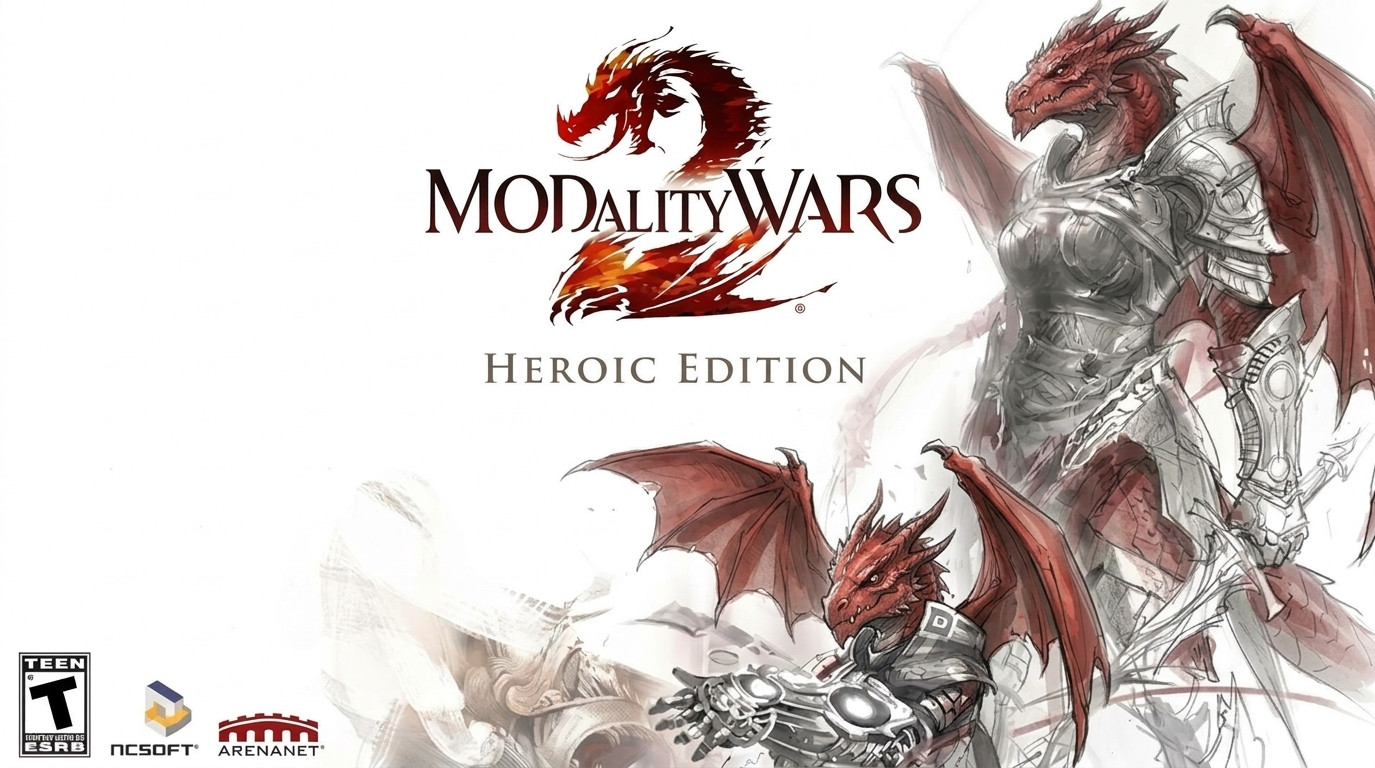
Admit it: we’re all guilty of comparing qubit modalities at some point. I’ve done it. You’ve done it. The Quantum Dragon does it at every meal. So, even though Brian Lenahan’s “Modality Wars – Late 2026” is paywalled, it deserves recognition for having a title that invokes a sense of adventure. Fun fact: The Quantum Dragon recognizes the knights photographed around the table.
This week’s IQT News:
- The New Quantum Era with Sebastian Hassinger
- IQT Sunday Edition
- QMill Exactness vs Haiqu Approximation
- US Government Funded Quantum Chemistry & Quantum Life Science Initiatives
- US Government Funded Quantum Finance Initiatives to Safeguard Risk Modeling, Portfolio Optimization, Cryptography, Q-Day
This week’s The Premium Quantum Dragon (Substack):
- Anderon’s Superconducting Quantum Process Design Kit (PDK)
- Quandela Hub
- Quobly’s QPE Toolbox
- Conductor Quantum’s Coda Node
- Quantum Playground
- QCOL
- Quobly Alloy Forge
This corpus is a diverse collection of text data from various sources, including websites, articles, and documents, covering topics such as technology (particularly quantum computing and machine learning), data protection and privacy policies, professional development and training, and company information. This collection includes contexts from many websites, financial reports, investor information, and corporate governance, which can be drawn upon to provide information and answer questions.
This week’s Friends of The Quantum Dragon (inline):
- We reduced decoder training from minutes to seconds. by Steve Brierley, CEO of Riverlane
- Making Signal Detection and Location Ready for Real-World Use by Colin Sullivan, Managing Director, UK at Infleqtion
- “We are bringing advanced infrastructure, software and expertise together.” by Regev Yativ, Chief Revenue Officer at Classiq
- Can post-quantum security impact how risk is evaluated? by Alex Pruden, CEO and Co-Founder, Project Eleven
- Sparrow Quantum is only getting started. by Dr. Peter Lodahl, Founder and CEO at Sparrow Quantum
- Integrate QKD and PQC with existing infrastructure. by Terry Cronin, VP Business Development and Marketing at Toshiba
In this edition:
- We reduced decoder training from minutes to seconds.
- Transmon Qubits
- The wheels on the chip go round and round…
- Making Signal Detection and Location Ready for Real-World Use
- Top Substacks this Week: October 19, 2026
- Sir Possibly and the Fairy-Proof Kingdom
- “We are bringing advanced infrastructure, software and expertise together.”
- Alice & Bob is “Riding the Dragon”
- QMill Exactness vs Haiqu Approximation
- Can post-quantum security impact how risk is evaluated?
- This Halloween, say: “Treak!”
- FINALLY, something for you Pythonistas out there…
- Sparrow Quantum is only getting started.
- Integrate QKD and PQC with existing infrastructure.
- Quantum Noise Detector
We reduced decoder training from minutes to seconds.
Following the announcement that Riverlane and Nvidia are partnering on quantum error correction, Steve Brierley, CEO of Riverlane, provided this exclusive comment:
“Our partnership with NVIDIA shows how advances in classical computing can help tackle some of the biggest challenges facing quantum systems today. By reducing decoder training from minutes to seconds, we can recalibrate QEC systems more quickly as qubit behavior changes, bringing us one step closer to building useful, fault-tolerant quantum computers.”
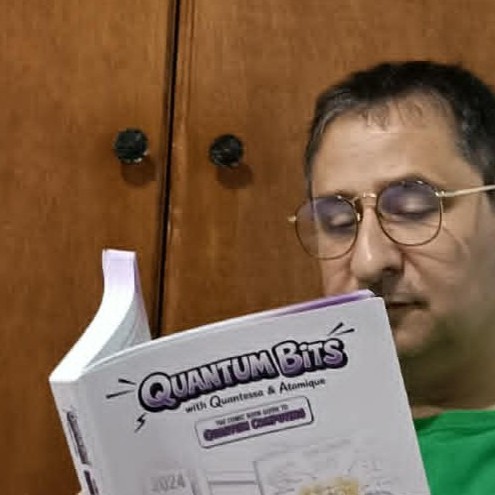
https://a.co/d/0i1fndcr
Transmon Qubits
I knew a little bit about transmons already, including the fact that the technology is almost 2 decades old, but besides the history lesson, which goes well beyond that, of course, Yuval Boger’s “Quantum Bits” also provides a shock absorber analogy. I think I am required by law to include all analogies here that I’ve never thought of.
https://a.co/d/07IJjYvD
The wheels on the chip go round and round…
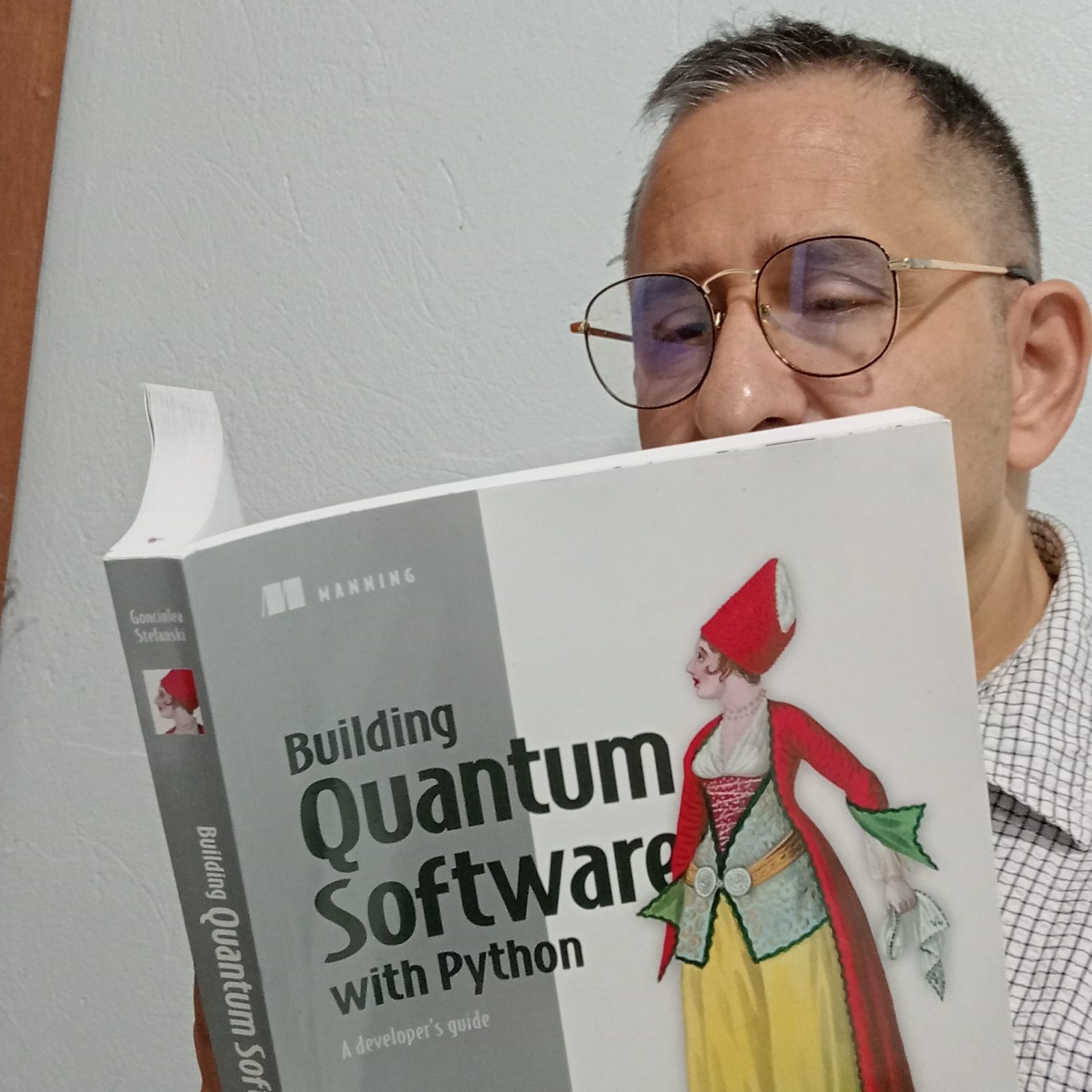
I was only going to mention illustrations once, which I did last week, but then I encountered another one that deserves mentioning. Dr. Constantin Gonciulea’s and Charlee Stefanski’s “Building Quantum Software in Python: A developer’s guide” uses a wheel representation to illustrate how pairs of qubits can be combined, the first I’ve seen that.
Making Signal Detection and Location Ready for Real-World Use
Following the announcement that Infleqtion received £9M (~$12M) from Innovate UK, in support of Quantum Spectrum-DF, Colin Sullivan, Managing Director, UK at Infleqtion, provided this exclusive comment:
“With this investment, we’re building on our early work to develop a system that can detect and locate radio signals in contested environments. Our focus now is on making that capability more compact, reliable and ready for real-world use. This is an important step toward making quantum sensing more practical and expanding where and how the technology can be used.”
Top Substacks this Week: October 19, 2026
I don’t know what I’d get if I “win,” but if you could vote for The Quantum Dragon, I’d greatly appreciate it.
Sir Possibly and the Fairy-Proof Kingdom
I might be biased, but I thought “Of Steam and Dragons: A Quantum Steampunk Short Story” was pretty creative. That was until, of course, Dr. Craig Wright shared his own satirical allegorical fable. Depending on your reading speed, this could be a good 5-15 minute diversion from your daily grind. This link may require a LinkedIn account.
“We are bringing advanced infrastructure, software and expertise together.”
Following the announcement that Classiq and FreeYa Mind Campus have partnered to establish a Quantum Applications Hub in Romania, Regev Yativ, Chief Revenue Officer at Classiq, provided this unique comment:
“This is a major milestone for Classiq and for Romania’s quantum ecosystem. Together with FreeYa Mind Campus, we are bringing advanced infrastructure, software and expertise together so businesses, researchers and universities can build the skills and applications that will drive quantum adoption. Classiq’s role is central: we provide the software foundation and training that enable this community to develop applications addressing real industry challenges. We are proud to help Romania play an increasingly important role in Europe’s quantum future.”
Alice & Bob is “Riding the Dragon”
This post is about “AI-accelerated R&D,” and the image is of Sigma, Alice & Bob’s quantum cat, riding a dragon, so the dragon must presumably be The Quantum Dragon’s cousin, The AI Dragon. They’re actually going to meet up in New York City next week while we humans will be networking with other humans. This link may require a LinkedIn account.

Image generated by Google’s language model AI.
QMill Exactness vs Haiqu Approximation
“Haiqu vs QMill for Circuit Compression” left an open question. For the most part, Haiqu compresses your quantum circuits more. So much so, in fact, that you can run surprisingly large circuits on today’s noisy hardware and see correct solutions. But QMill was cooperative, so instead of making it seem like a hit piece, I asked for a response to the results I was getting. QMill’s speculation was that Haiqu approximates, whereas QMill is exact. Haiqu has confirmed the use of a “small amount” of approximation, but let’s see how much we’re talking about here.
Brian Lenahan’s Castles & Quantum Tech
With the disclaimer that we don’t agree with all of the characterizations of the various quantum computing technologies, especially non-coherent annealing, The Quantum Dragon absolutely loves the notion of analogizing them as castles. One thing that seems to be missing, though, is the cost of building castles. Like quantum computers, not everyone could afford one.
Can post-quantum security impact how risk is evaluated?
Following the announcement that Project Eleven and Relm Insurance have partnered to explore quantum risk in digital asset insurance, Alex Pruden, CEO and Co-Founder, Project Eleven, provided this exclusive comment:
“A cryptographically relevant quantum computer doesn’t need to exist for quantum computing to start having financial consequences. Insurers, custodians, and financial institutions have to assess risks years before they materialize. That’s what makes this partnership between Project Eleven and RELM interesting. We’re exploring whether post-quantum security can become something institutions can demonstrate, insurers can evaluate, and markets can eventually put a price on.”
This Halloween, say: “Treak!”
For your consideration: the illustrated superposition of trick AND treat.
FINALLY, something for you Pythonistas out there…
RhymeQ raised $2.2M so that FINALLY we’ll be able to program quantum computers in Python. And if you ask me, seeing Python’s general popularity, it’s about damn time. Quite frankly, I’m amazed that the industry has been able to get anywhere the past few years without making anything at all available in Python. Joking aside, I know a couple of the cofounders and I just requested access.
Sparrow Quantum is only getting started.
Following the announcement that Dr. Peter Lodahl has been appointed CEO to lead Sparrow Quantum’s next phase of technical development, Dr. Lodahl provided this exclusive comment:
“I founded Sparrow to solve one of the biggest challenges in photonic quantum computing: making high-quality quantum light available reliably and on demand. Seeing our technology now being used by customers around the world is something I’m incredibly proud of. But we’re only getting started. Our next challenge is to take what we’ve built and use it to make fault-tolerant quantum computing possible at scale. There is still a lot of exciting science and engineering ahead of us, and I look forward to leading the team through this next chapter.”
Integrate QKD and PQC with existing infrastructure.
Following the launch of Toshiba’s new Quantum-Safe Networking (QSN) Platform, Terry Cronin, VP Business Development and Marketing at Toshiba, provided this exclusive comment:
“We’ve proven quantum-safe technologies can work on live U.S. commercial networks. Now, we need purpose-built solutions that make quantum-safe protection practical to deploy and scale from the network core to the edge. Toshiba’s QSN Platform helps enterprises and network operators integrate QKD and PQC with existing infrastructure, providing a practical path to stronger, scalable quantum-safe protection.”
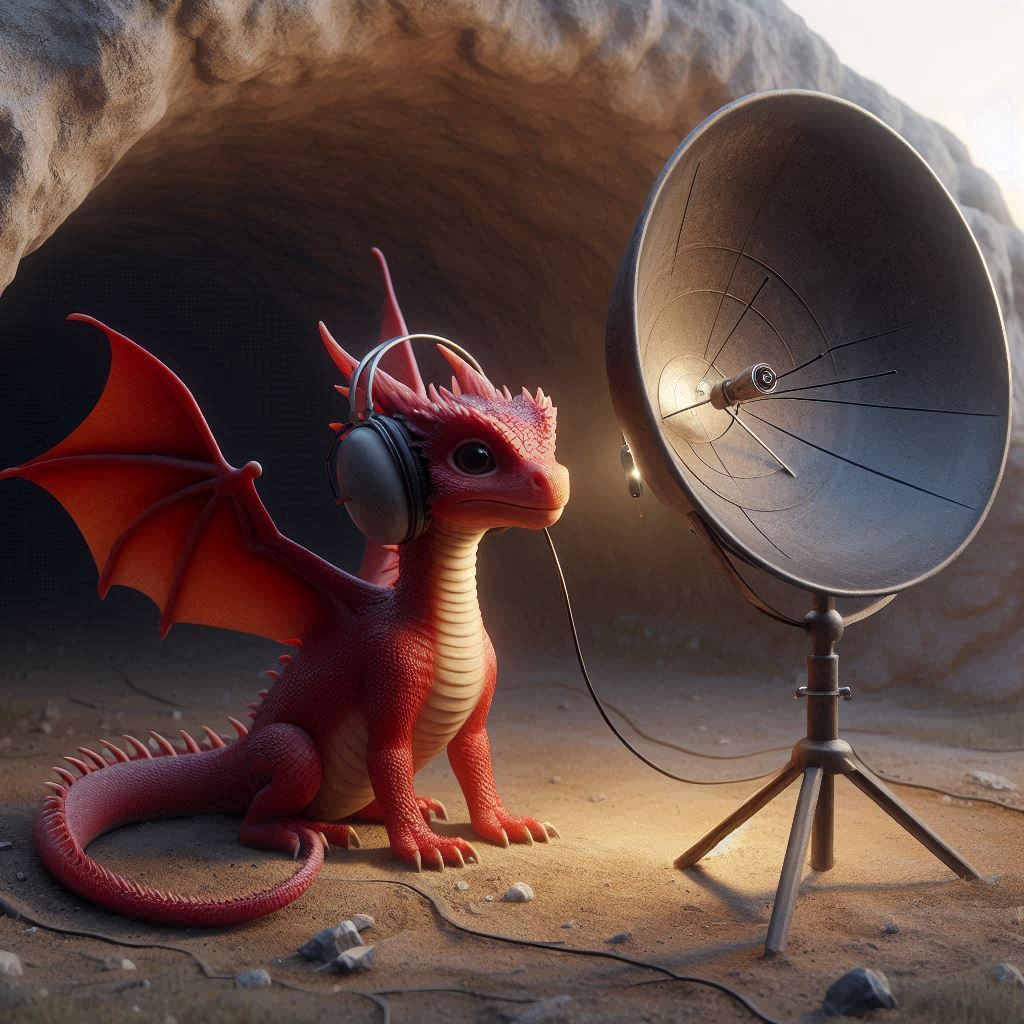
Image generated by an AI model provided by Microsoft Copilot.
Quantum Noise Detector
Alan Ho and Prof. Michael Biercuk inspired the Resuscitated Quantum Bullshit Detector, but the original(?) has resurfaced on Bluesky. It’s back to reposting a simple “bullshit” or “not bullshit,” so The Quantum Dragon will continue to monitor for challenges, controversies, and debates under this new name from Dr. Bob Sutor.
- Prof. Amit Hagar took a swing at QuEra’s Chief Commercial Officer, Yuval Boger, over comments he recently made (and wrote) about scaling quantum computers.
- Firing a shot across the bow of a large swath of the industry, Saleh Naghdi concludes “Even sampling from a quantum spin glass may not require a quantum computer (a video abstract, for a change)” with “Your work laptop: 1. Quantum computer: 0.”